
Serra da Estrela
The Serra da Estrela is the highest mountain range in Portugal and the country's only winter sports region - it reaches almost 2000 m above sea level. However, the ski slopes cannot be compared with those in the Alps. The vegetation limit begins at around 1000 m. From this altitude upwards, the area is very barren and inaccessible, but beautifully pristine.
The lower mountains are home to the few tourist resorts that only come to life during the ski and summer seasons. Shepherd villages are scattered in the rugged surrounding countryside. The old people still live from sheep and goat farming and all that goes with it: cheese, wool, furs etc. The young ones drive to the nearest town every morning and work in the factory.
A real specialty is the Queijo da Serra, a mountain cheese made from sheep's milk, which is produced here by hand in an elaborate process and has a sharp, full flavor. Queijo is now considered a delicacy, but more and more factory-made cheeses are being added to the range. For a few years, it looked as if the shepherd's profession was dying out. But in the village of Seia, where the annual sheep round-up is celebrated, 1,600 animals were gathered in 2022, after the number had dropped to 600 in previous years. State subsidies certainly play an important role in the revival of sheep farming, as grazing is a good way of preventing forest fires.
For the Parque Natural da Serra da Estrela tourist information offices have leaflets with useful maps for individual hikes, usually in English (facebook.com/aldeiasmontanha and aldeiasdemontanha.pt).
Important: When hiking in higher regions, the tree line is crossed and there are no trees to protect you from the sun, so think about sun protection. In fall and spring, snowfall may be on the cards.
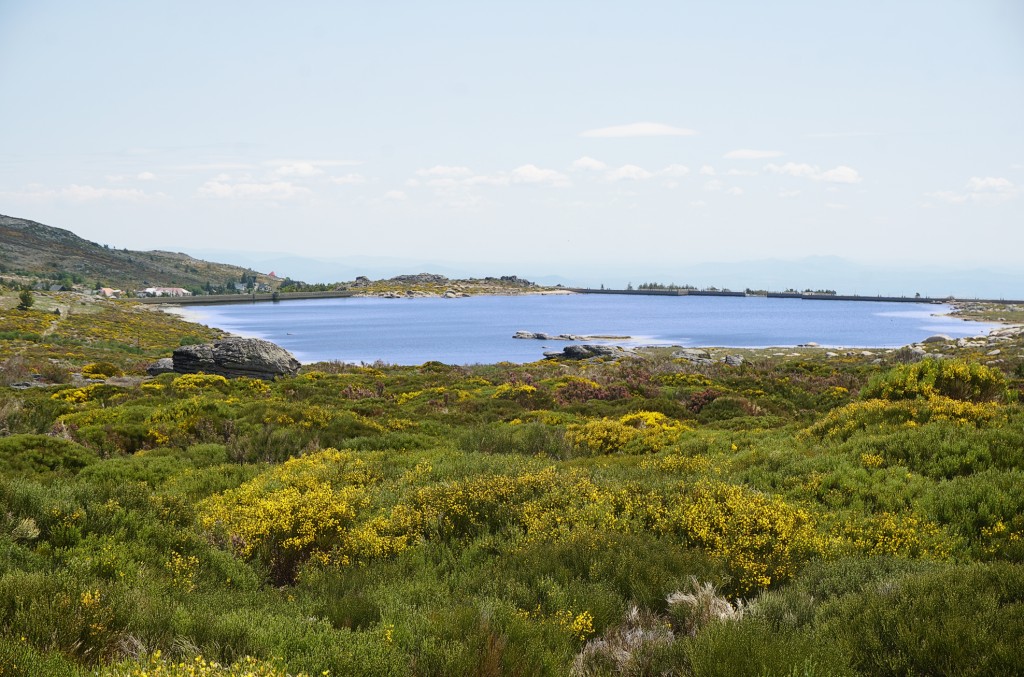
Reservoir on the plateau
For a tour through the mountains you have to take the car from Covilhã up the mountains in narrow hairpin bends, mainly in second gear. Through the winter sports center Penhas da Saúde in the direction of Torre, the highest mountain in the range. At an altitude of almost 2000 m, clear streams flow towards the valley, and in the bizarre rocks a Nossa Senhora da Boa Estrela, a relief of the Virgin Mary carved into the rock, watches over the whole country.
If you follow the N 339, you will reach Portugal's highest village, Sabugueiro. Continue into the valley to Seia. The former textile town does not keep visitors under its spell for long, unless they enter the nature park's information center, which presents multimedia information on nature. If you haven't already done so, you should try a mountain cheese Queijo da Serra now.
To the north of Seia, also at the foot of the mountain massif, lies Gouveia. In addition to visiting the archaeological finds in the area, you can also spend a day here and in neighboring Folgosinho (Rest. O Albertino) are also great places to eat. A detour to the historic village of Linhares is also worthwhile.
From Gouveia, the road leads past the Cabeça da Velha (a rock that looks like a face) and then climbs steeply up the mountain again before winding through a forest to Manteigas through a forest. In winter, the area around the village offers an icy spectacle when the frozen rocks float through the Vale glaciar of the Rio Zêzere or tumble down the Poço do Inferno. From here you can reach both Belmonte and (through the Vale glaciar) Covilhã.