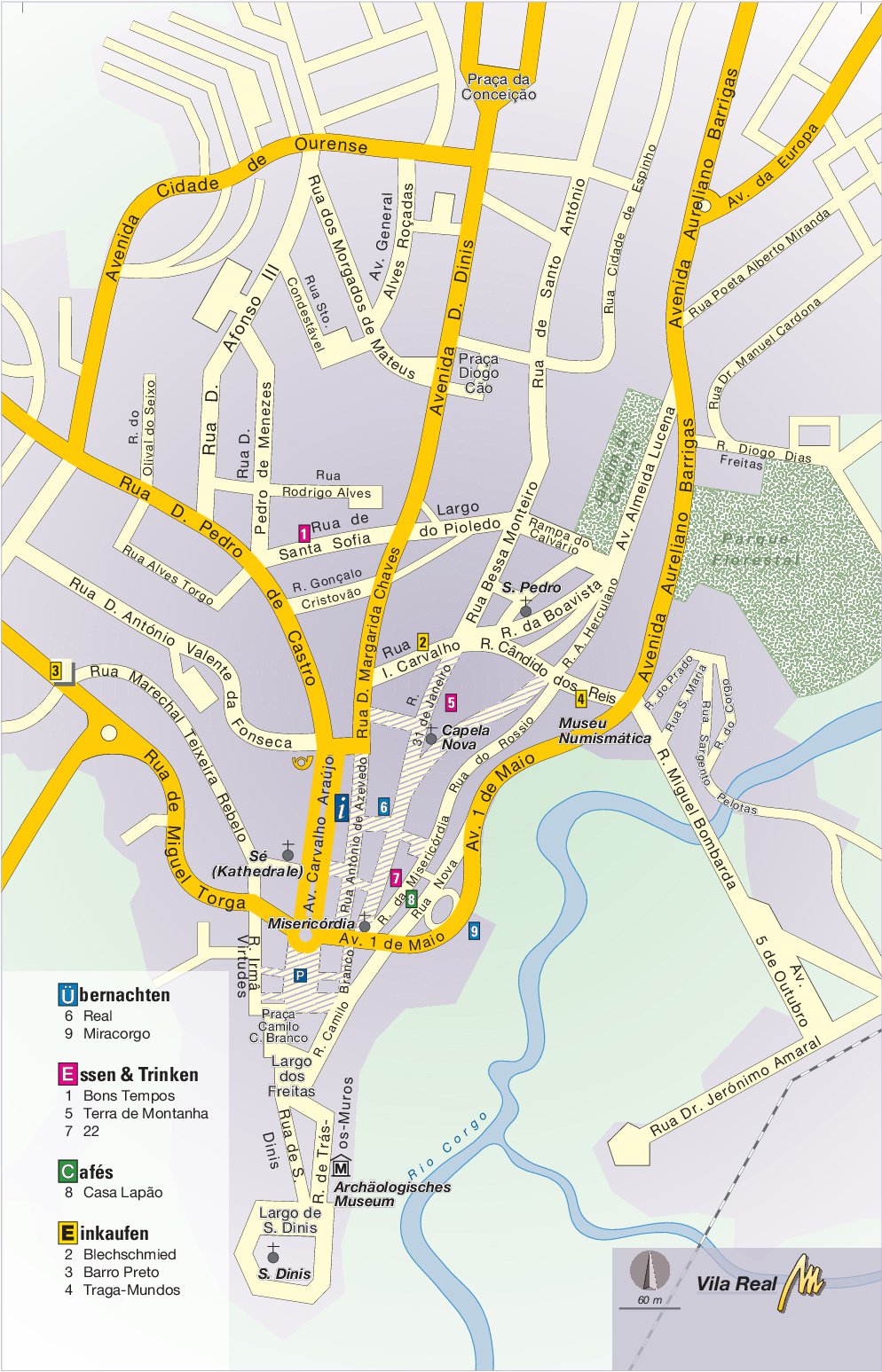
Vila Realapprox. 18,500 inhabitants
Vila Real is young. Although it has had city rights since 1289, it was only in the last 100 years that the small town at the confluence of the Rio Corgo and Rio Cabril grew to its present size. Accordingly, many buildings are also new, which does not necessarily enhance their beauty.
Vila Real was the first of Portugal's major urban centres to be completely electrified in 1895, thanks to the construction of a hydroelectric plant on the Rio Corgo. There is a university and a Politécnico(technical college) with a total of 7,600 students who keep the city lively.
The city also offers sights worth seeing, e.g. the Sé Catedral, also known as Igreja de S. Domingos, because it belonged to a Dominican monastery. The monastery was destroyed by fire in the 18th century, but the church was saved and restored. The cathedral, which is Gothic in its origins and dates from the 15th century still shows strong Romanesque features. Especially the cube-shaped capitals decorated with heads, leaves and vines and the nave pillars can be attributed to this older architectural style. The main altar is decorated with statues and paintings in Baroque style.
The Capela Nova, also Capela dos Clérigos is an imposing building, also Baroque, attributed to Nicolau Nasoni, an Italian who made Portugal his adopted country and to whom we owe some impressive buildings. Inside the church, azulejos tell the life story of Saints Peter and Paul.
A wonderful view of the confluence of the Rio Cabril and the Rio Corgo can be enjoyed from the Miradouro Trás-do-Cemitério near the church of São Dinis, behind the cemetery.
In the city centre you will find some stately houses from the 15th to the 18th century. The large coats of arms on the outer facades are particularly interesting.
Walk: just before the Miguel Bombarda bridge, alleys lead down into the river valley through the old Bairro dos Ferreiros district. Along the street there are charming houses. The former blacksmith quarter was subjected to a "revitalisation", new residents between 20 and 40 years of age were lured into the renovated houses under favourable conditions. At the bottom of the narrow green gorge, there are walking paths along the water on both sides of the Rio Corgo. One passes trim-dive equipment, which appear to be willingly used. At the end of the path you reach the public outdoor swimming pool of Vila Real.
Surroundings of Vila Real
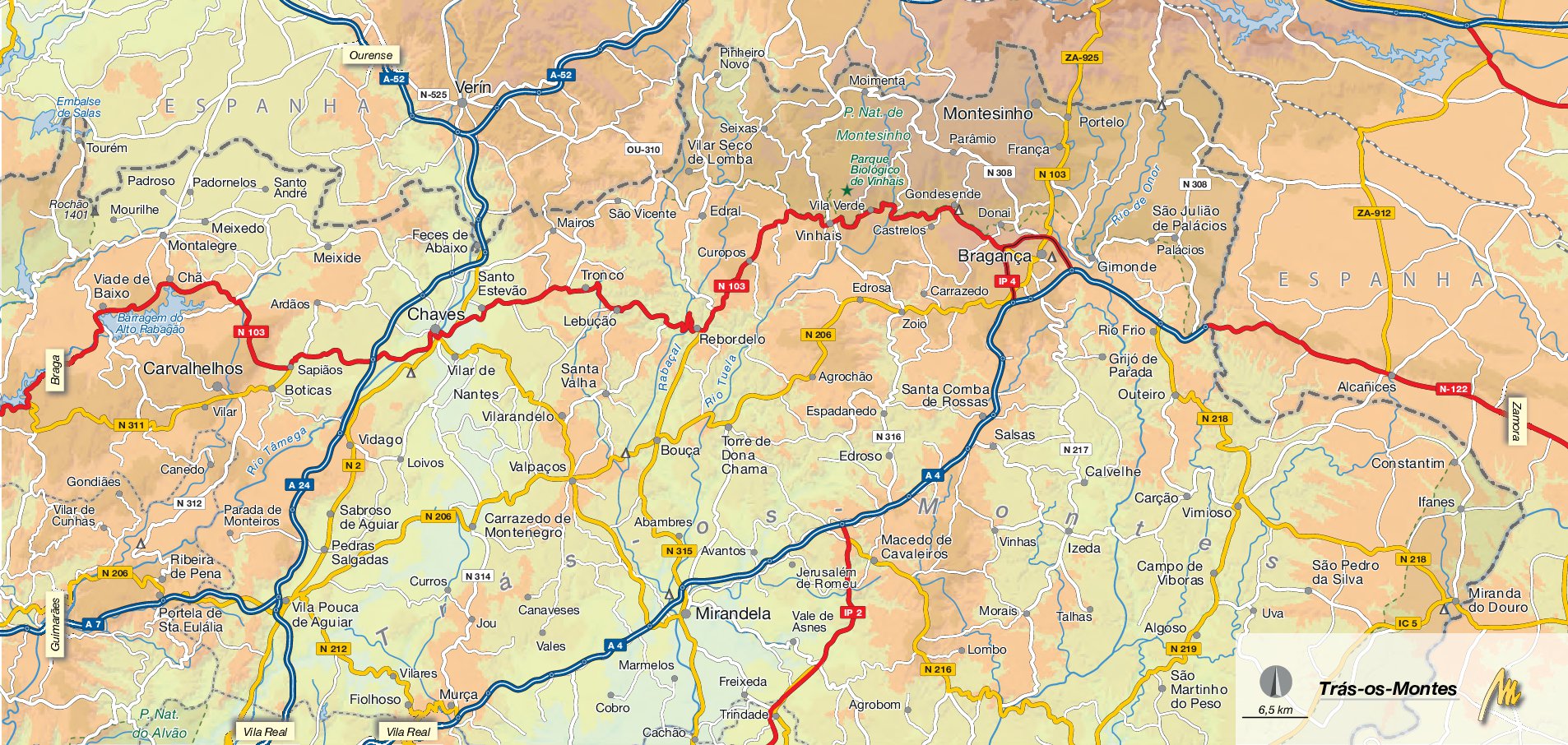
Mateus: the real attraction of Vila Real is the Casa de Mateus, the manor house of the Albuquerque family in the village of Mateus, 3 km from Vila Real, where the wine of the same name comes from. Baroque buildings from the 18th century are surrounded by a lovingly tended park, which enchants with its bizarrely cut hedges. The U-shaped residential palace houses porcelain from Meissen and China, various paintings and valuable carpets from Arraiolos Arraiolos. The private museum displays a copy of the first illustrated edition of the "Lusiades" by the Portuguese national poet Luís Vaz de Camões, which was printed in 1817 by order of the Count of Albuquerque.
The wine cellars of the estate Sogrape, where the famous sparkling rosé is matured, are only a few metres from the palace, but cannot be visited.
♦ May-Oct. daily 9 am-7 pm, otherwise 9 am-6 pm. Guided tours hourly in Portuguese, French and English. Admission garden: €10, child €6.50. Home and Garden: €13.50, Tel. 259-323121.
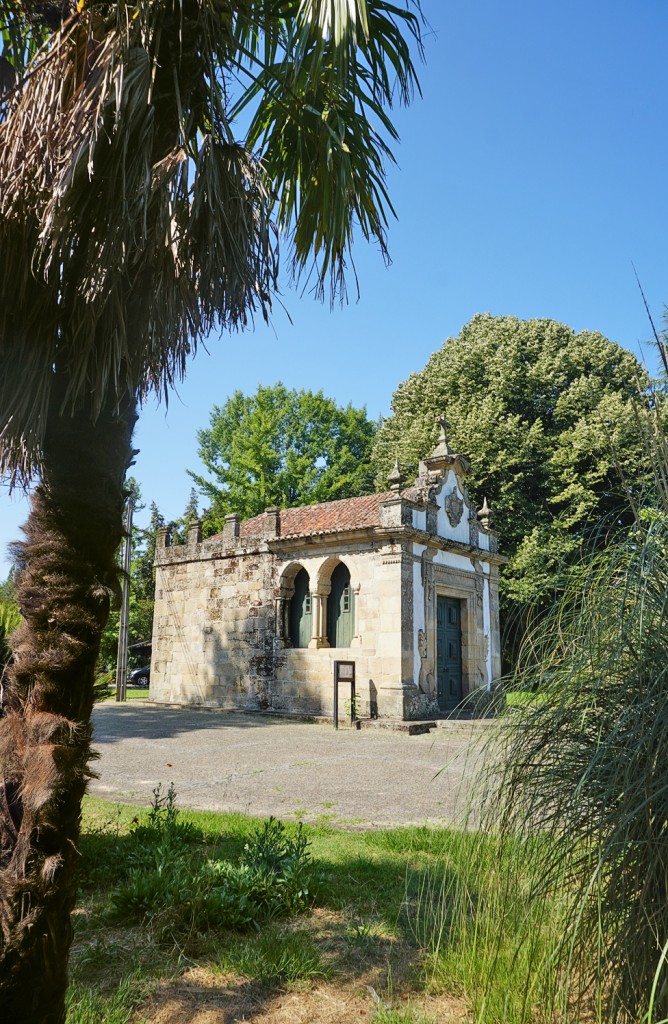
Chapel on the university campus
Santuário de Panóias: another 6 km away, behind the village of Constantim, you will find the cult site, which is one of the most interesting archaeological sites in Portugal. In various pits cut into the granite, which are connected to each other by small channels, the indigenous people, the Lapiteias, the Lapiteias, are said to have offered animal sacrifices.
Also the Romans left behind their traces, in around the 3rd century, in the form of inscriptions and large tubs carved into the stone. The ritual acts celebrated here were dedicated to the bloodthirsty god Serapis. The ritual can be reconstructed from the inscriptions. The sacrificial animal wrapped in a dough-like mass was burned and the meat was then eaten as a sacred meal. The burnt entrails were sacrificed. Afterwards they celebrated a big feast with dance and wine in honour of the deity.
♦ Tue-Sun 10 am-12.30 pm and 2.30-6.30 pm. Admission €2, with Cartão Jovem, under 25 years and over 65 years €1, under 14 years free
Alvão Nature Park: the park covers more than 7,200 hectares on the western side of the Serra Alvão, which acts as a "condensation barrier" and protects the wetter part of the land Litoral from the drier Interior. The rock consists partly of granite (near Lamas de Olo), partly of slate (near the village of Ermelo, which is worth seeing). The park is home to wolves, peregrine falcons, salamanders and various species of bats. The vegetation is dominated by various types of oak and birch.
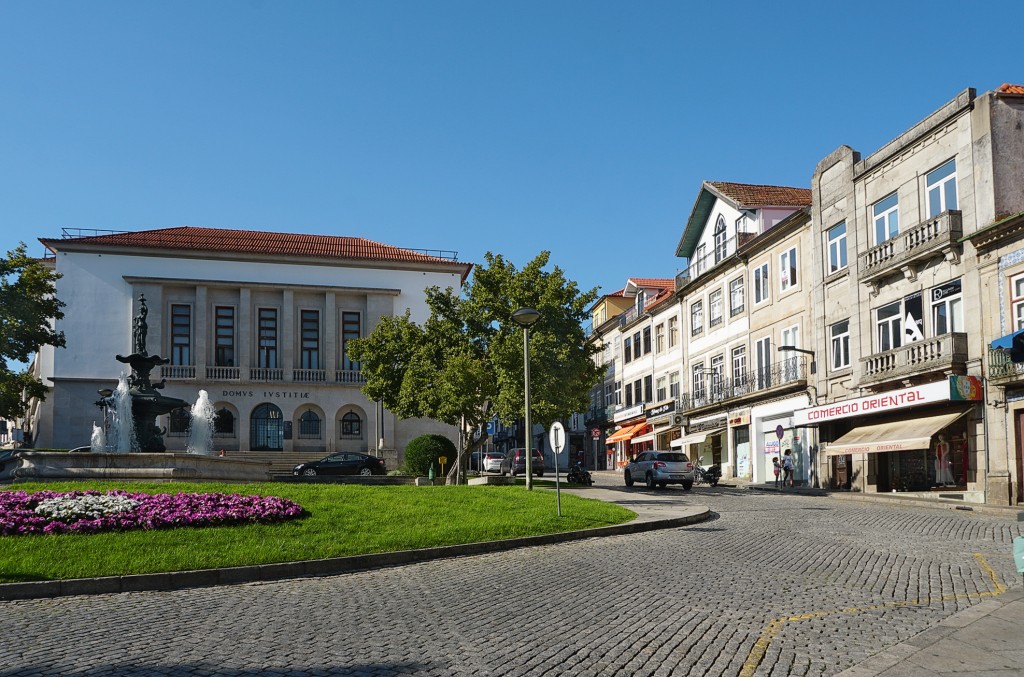
Neat - the square in front of the court palace
Stay overnight Muas Guest House, a modern country inn in Muas with a family atmosphere and pool. Muas-Guest-House, Tel. 913-118313. €€€
Hiking A circular hike of approx. 12 km leads to the Ermelo waterfalls. It starts in the village of Ermelo and runs along the Rio Olo valley. The Cascadas are the highest on the Iberian Peninsula, and even in summer there is still enough water in the pools for a refreshing swim.
Practical info→ Map
Information Turismo, daily 9 am-1 pm and 2-6 pm, in winter and Sat/Sun often with variable lunch break. At the main square, Av. Carvalho Araújo 94, Tel. 259-308170 or 933095424.
Information office of the Alvão Nature Park, Tel. 259-302830.
Connections Bus: There is a bus station at Rua D. António Valente da Fonseca, Tel. 259-340710. Up-to-date information on the many bus routes at www.terminalvilareal.pt.
Telephone numbers Police Tel. 259-330240, Hospital Tel. 259-300500, Taxi Tel. 965071841
Shopping Barro Preto 3, pottery made from black clay. On the Avenida de Noruega, there are a few cubes with stalls selling this northern Portuguese specialty. It is produced in the village of Bisalhães, 7 km west of Vila Real. The method is ancient, on YouTube you can learn about the manufacturing process: Bisalhães black pottery manufacturing process - YouTube
Sheet metal workshop 2 it is very rare to meet members of this dying profession today. The local tinsmith is 86 and still in the shop every day with his wife. It had to be a watering pot made of galvanized sheet metal for me this time ... Rua Isabel Carvalho 21.
Traga-Mundos 4, a small bookshop with literature about the Trás-os-Montes region and the Douro. There will also be some arts and crafts and a variety of wines from the region. The owner has a doctorate in sociology from the University of Kiel. Rua Miguel Bombarda, 24.
Accommodation/Camping There are a number of inexpensive guest houses near the cathedral.
Hotel Miracorgo 9, not far from the city centre with well-equipped, modernly furnished rooms in pastel colours. Modern art adorns the walls. Bathrooms with tub. Av. 1° de Maio 78, Tel. 259-325001, www.hotelmiracorgo.com. €€€
Real 6, above the pastelaria of the same name. Large rooms with parquet flooring, double bed, bathroom with shower. There are also rooms with two beds at the same price. Rua Combatentes da Grande Guerra 5, Tel. 259-325879, www.residencialreal.com. €€
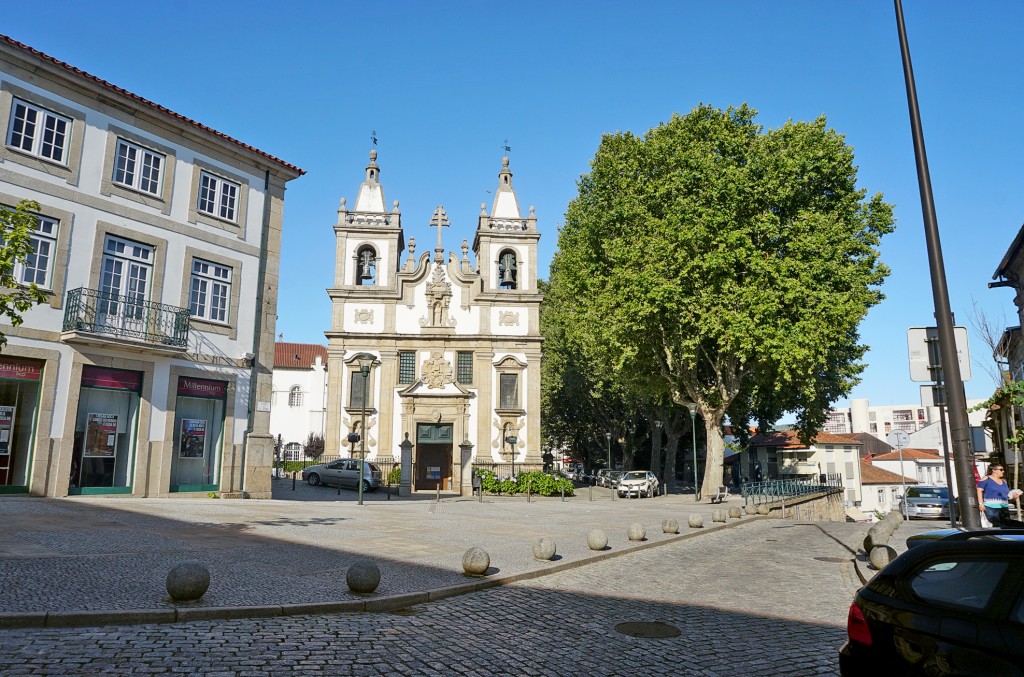
Pretty corner by the Igreja de São Pedro
Turismo de Habitação Casa da Quinta de S. Martinho, two rooms and two flats are rented. The spacious rooms are also equipped with large bathrooms. Bar and TV in the lounge. Mateus, Tel. 259-323986, www.quintasaomartinho.com. €€
Camping Clube de Campismo Vila Realbeautiful, terraced campsite above the Rio Corgo. There is plenty of shadow in the lower area of the campsite. With F.I.C.C. 10% discount, with C.C.N. 20% discount. Open Feb. to mid Dec. Rua Dr. Manuel Cardona, Tel. 259-324724, www.campingvilareal.com.
Food & Drink A good handful of restaurants can be found at the beginning of Rua Teixeira de Sousa, almost all of them with outdoor seating in the atmospheric alley near the church Misericórdia.
Restaurants 22 7, on the 2nd floor. There are three small dining rooms and inexpensive house wine. Main course from approx. €8. Rua Teixeira de Sousa 16, Tel. 259-321296.
Mein Tipp Bons Tempos 1, thinly sliced fritters that really taste like potatoes, and delicious sauces that accompany some dishes, such as the venison goulash (Bife de Veado) with mushrooms and red cabbage. Some of the house specialities can only be ordered in a double pack for 2 pers. Main courses about €12. It is especially nice to sit in the garden behind the restaurant. There are also regularly three wholesome vegetarian dishes on the menu. Tue and Sunday evening closed Rua de Santa Sofia, Tel. 259-322394, www.bonstempos.pt.
Terra de Montanha 5, very cosy restaurant. You sit in halved, huge wine barrels, which partly serve as a separation. Excellent regional cuisine. Mo closed Rua 31 de Janeiro 16-18, Tel. 259-372075.
Café Casa Lapão 8 where the delicious Pasteis de Santa Clara are made here. Unfortunately, the café is very small, but you can also take the treats with you and eat them outside. Rua da Misericórdia, 51.
Bars Some bars with a student crowd are on Rua de Santo António street, above Jardim da Carreira park, e.g. Metrópolis and Xots.