
Bragança23,000 inhabitants - Vinhais
Bragança is the largest city in the Trás-os-Montes region, but how underdeveloped the area is is evident in the lack of industrial districts that usually surround the larger cities of northern Portugal.
A lot of money was pumped into the city by the state at the beginning of the new millennium. Police and administrative buildings have been rebuilt, and the well-kept park that winds along the Rio de Onor is now a nice promenade for walking. The Escola Superior (University of Applied Sciences), which originally only taught pedagogy, was also expanded to include agriculture, business administration, computer science and medicine. Courses can also be taken in very specialised fields, e.g. phytopharmacy. For the students and at the same time to revitalise the centre, old town houses were renovated and converted into halls of residence. 8000 students are now enrolled here, almost a third of whom are guest students from Brazil or Africa. The bishop of Bragança did not remain inactive either, he had the foundation for an imposing cathedral laid in 1994 - a chic and outrageously expensive building that was consecrated in 2001.
Bragança played an important role in the history of Portugal. Brigo IV, King of Spain, founded the city in 906. In 1187 Bragança received the "charter" from King Sancho I. In the same year he had the Cidadela(town castle) built, which is still well preserved today. Many Spanish Jews found a new home in Bragança after their expulsion by Ferdinand and Isabella and gave the city a boost. Most converted to the Catholic faith and liked to give themselves names of trees. In the 15th century, Bragança became the seat of the ducal and later royal family of the Braganças, who ruled the country until the abolition of the monarchy in 1910. However, the lords and ladies never lived in Bragança, their family seat was in Vila Viçosa. In 1995 Dom Pio Duarte, the last descendant of the King, married a noble financial broker in Lisbon, who also gave him potential heirs to the throne, to the delight of the country and the monarchists.
In the 1960s and 1970s many families went to France and Germany. The first ones have long since returned and have set up modern houses on the outskirts of the city.
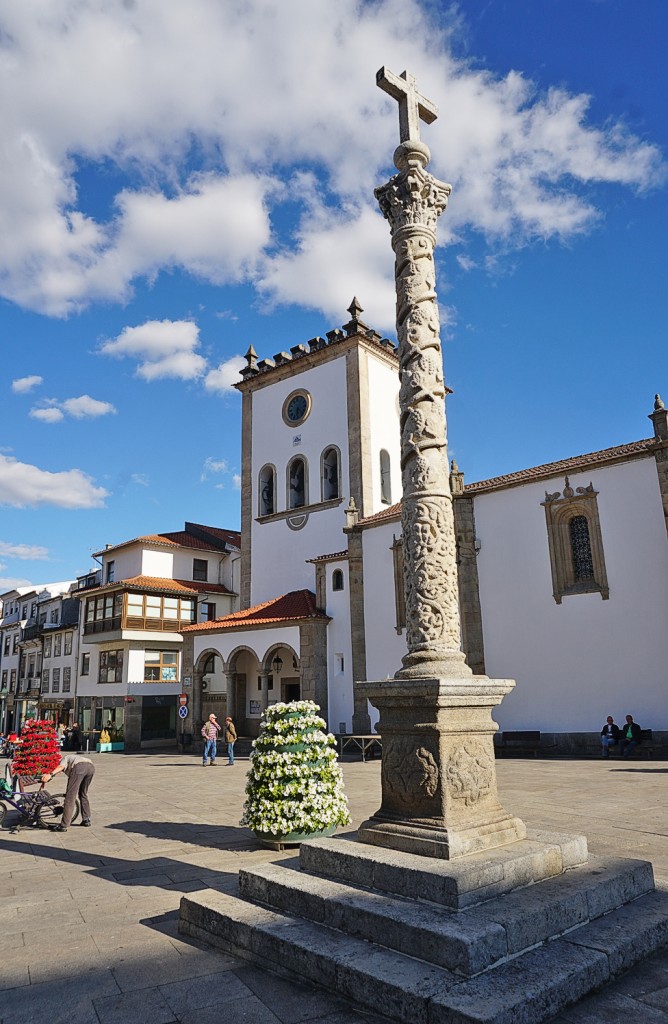
Baroque cross in front of the cathedral
Worth seeing
The central square is the Praça da Sé with a baroque cross (Cruzeiro) in the middle, which originally stood in the cemetery. The church itself, from the 16th century, has no artistic treasures. Especially in the evening the large square without name in front of the courthouse in the upper town is a popular meeting place. There are several street cafés.
Sé Velha: originally, only a monastery stood on the site of the old cathedral. Only when the Jesuits had to leave the country in 1759, it became a cathedral. The former monastery buildings now house the municipal library and the music school. With the inauguration of the Sé Nova in 2001 a little on the outskirts of Bragança, the old cathedral was downgraded to a parish church.
Museu do Abade de Baçal: the ethnographic regional museum resides in the former palace of the archbishop, which has been renovated to the highest standards. In the entrance area, the museum's namesake, Abade de Baçal (1865-1947), greets us with self-satisfaction from an oil painting. Bishop Baçal dedicated his life to ethnographic research; he published a standard work in eleven volumes on the Trás-os-Montes region. The museum presents clearly arranged excavation pieces from the area. The animal sculptures of the "Berrões" got an extra room. Also interesting is a watercolor cycle with 28 paintings by Alberto de Sousa, who captured the pillory of the Bragança district on paper - the pillory as an art motif.
♦ Daily (except Mon) 9.30 am-12.30 pm and 2-6 pm. Admission €3, pensioners and 14-25 year olds €1, with Cartão Jovem €0.80.
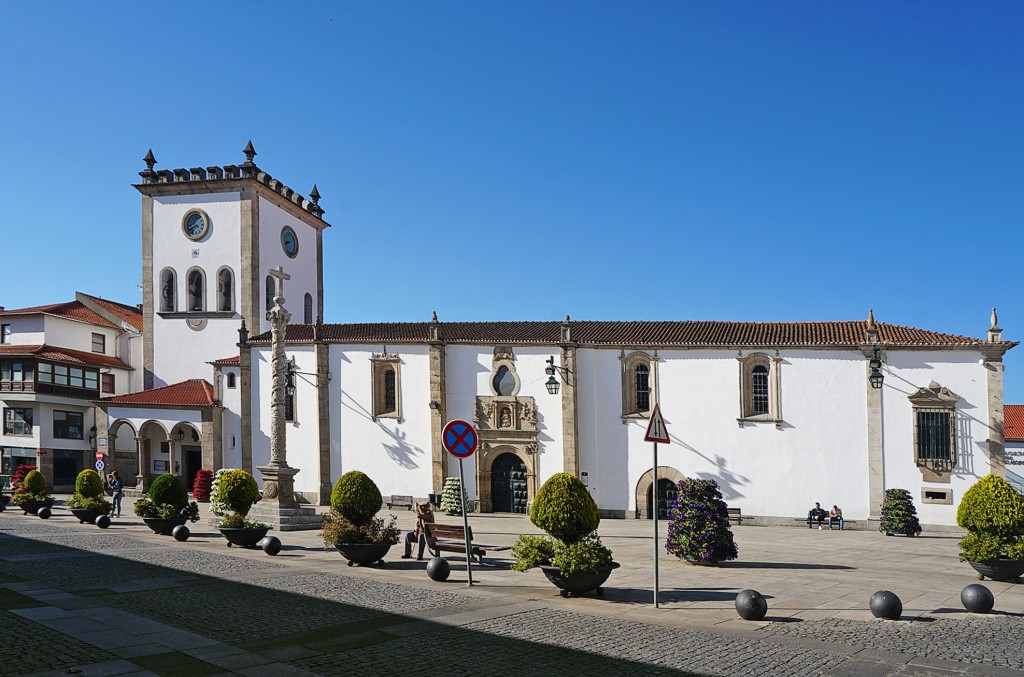
Flawless white - the cathedral of Bragança
Modern Art Museum: the Bragança administration wants to turn the town into a museum centre. The most important new museum is the Centro de Arte Contemporânea Graça Morais, dedicated to the artist who was born in the region. Her work deals strongly with the role of women in the rural world.
♦ Daily (except Mon) 10 am-6.30 pm. Admission €2, with Cartão Jovem and students €1.
One of the most beautiful squares in the city is at the end of Rua Abílio Beça Church of S. Vicente there is a large trough fountain and, in the middle, the monument to the war veterans. The magnificent building with the loggia, which used to house the prison, now houses the region's tourist office. From the square, the Rua T. Coelho leads up to the fort.
Convento de São Bento and Church: the original convent was founded by a noblewoman who had the pre-existing buildings converted. The church is entered from the side through a portal with Manueline decorations. Inside there is a splendid gilded main altar and colorful ceiling paintings. Shortly before the main altar one sees geometric stucco works of Islamic origin.
Castelo: in the 12th century fort, there is a small cluster of houses within the castle walls. On the pillory on the left in front of the fort with its peculiar stone base, the evildoers were tied up, tortured and exposed to the mockery of the public. The pedestal represents a prehistoric Berrões pig, which had the column planted on its back (→ box "Berrões"). There are not only the nice legends of the princess who waited for the return of her chosen one, but also, for example, the documented story of Dona Leonor, wife of the fourth Duke of Bragança, who was falsely accused of adultery and imprisoned in the tower. On 2 November 1512 she was even murdered by her duke.
Santa Maria Church: the entrance area of the church from the beginning of the 18th century is lavishly decorated with stone vines. Like the Domus Municipalis, the building itself probably dates back to the 13th century.
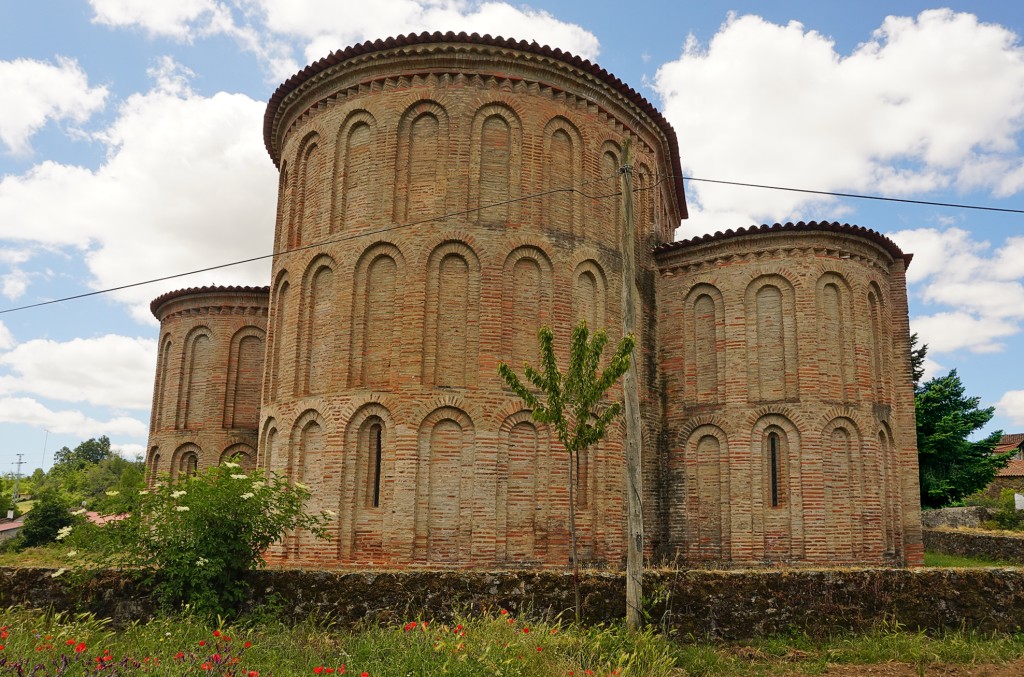
Castro de Avelãsfotos
Domus Municipalis: this peculiar building next to the Church of Santa Maria is said to be the oldest town hall in the country and one of the rare secular buildings from this period, probably built in the first half of the 13th century. It is a hall that was created by roofing a cistern and has a peculiar pentagonal floor plan. Small Romanesque window arches let the light in.
♦ No fixed opening hours. Free admission.
Museu Ibérico da Máscara e do Traje: the northeast of Portugal is famous for its winter festivals, which have a centuries-old tradition. Colourful are the disguises with which the ghosts are supposed to chase away the dark season and lure out the spring. The modern museum in the Castle District is dedicated to the masks and costumes of the Trás-os-Montes region and neighbouring areas in Spain. On three floors, 60 masks, 45 traditional costumes and handicraft items can be admired. The museum is run jointly by the municipalities of Bragança and Zamora (Spain).
♦ Daily (except Mon) 9 am-1 pm and 2 pm-5 pm. Admission €1.05. Rua D. Fernão 24/26.
Centro Ciência Viva: the centre is divided into two buildings. A futuristic building, almost buried in the river valley, shows ecological connections and is mainly visited by school groups. Originally, there was a mill here where silk produced in the Trás-os-Montes region was also dyed.
♦ Admission €2, Tue-Fri 10 am-6 pm; Sat/Sun 11 am-1 pm. Rua do Beato Nicolao Dinís 35, www.braganca.cienciaviva.pt.
Military Museum: the exhibition in the castle tower includes exhibits such as armour, weapons, uniforms, battle flags, etc. from the 12th century to the Angolan bush wars of the 1960s; a photo of the Mozambican freedom fighter and tribal chief Gungunhana is also on display. Gungunhana led the rebellion against the colonial power in 1895 and was interned in the Azores, where he died. Mouzinho de Albuquerque, the man who captured him, committed suicide in Lisbon in 1902.
BerrõesBerrões - the holy pigs
The pig, the first animal domesticated by man, was the main source of animal protein for the indigenous people who had settled down, and the extensive chestnut forests of Trás-os-Montes were good grazing grounds for the animals. For the people of that time the pig was a symbol of good living and filled stomachs. It was also sacrificed to ask for strength, cohesion and health. Remains of this cult were found in the form of over 200 chunky granite sculptures showing pigs, but also bulls. Mostly 1.5 m long, they were found within circular settlement walls, but also in miniature format as burial objects. The oldest probably come from the 1st century BC, others with inscription could have been inscribed in the 3rd century AD. Some well-preserved specimens can be seen in the Abade de Baçal museum in Bragança. The Bragança pillory (next to the castle) also shows a pig that has been misused: since the Middle Ages, it has had to serve as the base for the "torture stake".
9 am-12 pm♦ Daily (except Mon) 9 am-12 pm and 2-5 p.m. Admission €3.
Museu Ferroviário: almost 30 years after railway services to Bragança ceased, the railway museum in the former station opened in 2019. Lots of railway equipment and old locomotives.
♦ Tue-Sun 9 am-12.30 pm and 2 pm-5.30 pm. Free admission.
Castro de Avelãs: in the village of the same name 6 km west of Bragança. The ancient Benedictine monastery from the 12th century has been abandoned since 1543. Today only the church is still standing and has recently been completely renovated. Remarkable is the unusual brick construction, which is not found anywhere else in Portugal. As in a fortified church, there are only loopholes with large openings to allow the light enter the apse. The interior can only be visited on Sundays during mass.
♦ Direction Vinhais, at the end of Bragança turn left just after the former railway bridge (Castro Mosteiro).
Practical info
Information Turismo, rua Abílio Beça 103, where you can also get information about the Parque Natural de Montesinho, daily 9 am-6 pm. Tel. 273-381273, turismo@cm-braganca.pt.
Right next to this Turismo, the Centro de Interpretação da Cultura Sefardita has been established. It provides information about the Jewish community in Portugal by means of various display boards.
Connections Bus: Almost hourly to Porto (3 hrs. travel time) mostly via Vila Real (less frequently during school holidays Mon-Fri), 6 times daily mostly via Porto or Viseu and Coimbra to Lisbon, 6 times Amarante, Guimarães and Braga, twice Peso da Régua, Lamego, 6 times Viseu, once Foz Côa and Trancoso. The buses leave from the former railway station.
Plane: Small turboprop planes of the mini-airline Sevenair (www.sevenair.com) fly daily the route Bragança - Vila Real - Viseu - Cascais (Lisbon) - Portimão (Algarve).
Electric bicycles The city council has created the free rental system Xispa for visitors to the city. The bikes are at the Turismo office (somewhat cumbersome registration procedure).
Festivals and markets The large Feira das Cantarinhas farmers' and popular market is held in the city centre from 2 to 4 May. People come from the outer surroundings to buy and sell.
Feira Municipal, large market every Friday morning between the town hall and the new cathedral.
Festada Cidade (City Festival): From 12-22 Aug. the city centre is filled with music from countless loudspeakers. On Sundays there are processions and other religious customs, in the evening there are dances, folklore, etc. A highlight of the city festival is the medieval festival from 15th to 17th August.
Telephone numbers Police Tel. 273-303412, Hospital Tel. 273-310800, Taxi Tel. 273-322138.
Shopping Marron Oficina da Castanha, everything the chestnut tree yields. The interior of the shop alone, with the intense grain of the chestnut wood used, is worth a visit. Jam, liqueur, flour, sweets and even chestnut beer in six different flavors (some from Spain). Seating available for tasting Tel. 965-664830, Rua Combatentes da Grande Guerra 135.
Overnight stay/Camping Pousada de S. Bartolomeu 8one of the more modern pousadas, situated on a hill on the outskirts of the village. Beautiful view of the village and the old castle from the rooms. In the meantime, the chef has been awarded with a Michelin star. Estrada de Turismo, Tel. 273-331493, www.pousadas.pt. €€€
** Classis 1, on the main road west of the historic centre. Somewhat dusky accommodation in a new building. The rooms, two of them on the 4thfloor with terrace, are equipped with air conditioning. The rooms in the back are quiet. Av. João da Cruz 102, Tel. 273-331631, www.hotelclassis.com. €€
** Tulipa 2, quiet side street in the centre. The owner family keeps the 30 rooms in good condition. Rooms facing the front with a small balcony. The restaurant is also decent, huge and tender steaks. Bicycle rental. Rua Dr. Francisco Felgueiras 8-10, Tel. 273-331675, www.tulipaturismo.com. €€
Youth Hostel Pousada de Juventude Bragança 6, modern, barrier-free house. 28 rooms, including double rooms, and a fully equipped flat. Avenida 22 de Maio, Tel. 237-329231, www.pousadasjuventude.pt. €
Camping Municipal (INATEL), approx. 6 km outside on the 103-7 (Estrada de Rabal). Beautifully situated on the banks of the Rio Sabor. Tel. 273-326080.
Cepo Verde, about 13 km west towards Vinhais, in the Aldeia de Gondesende. Nicely terraced on a hill. Shadow by chestnut trees. Swimming pool. The cabins are available all year round. Open March-Oct. Lugar da Vinha do Santo, Gondesende, Tel. 273-999371, www.montesinho.com/alojamento.
Parque de Campismo Rural de Rio de Onor,Campisite in the Montesinho Nature Park, about 26 km northeast, near the village of Aldeia de Rio de Onor with 60 inhabitants, directly on the border to Spain. Tel. 919-982479 or 273-927061.
Food & Drink Good choice of restaurants with a high standard. Two pizzerias are also recommended: Casa Nostra, in the Tulipa Hotel and Pizzaria Luna.
Solar Bragançano 4here you can dine like the Duke himself. A Casa típica with lush chandeliers, flowers, lavish crystal, classical music, antique wooden ceiling and a small, romantic garden. Many game dishes, main course from €16. Closed on Mon in winter, better to book. Praça da Sé, Tel. 273-323875.
Mein Tipp Tasca do Zé Tuga 7, at the top of the castle. Dining room of manageable size, but there is also an area for sitting in the garden. Super service, excellent main courses and the desserts are also a delight. No rest day. Rua da Igreja 66, Tel. 273-381358.
Rosina 5, is run by Portuguese returnees who worked for a long time in northern Italy. Good Italian cuisine, homemade pasta, the ice cream comes from their own gelateria a few doors down. Tue rest day. Rua dos Combatentes da Grande Guerra 169, Tel. 273-326145.
O Geadas 9, the entrance area looks inconspicuous, the dining room is one floor below and has panoramic glazing with a view of the pousada hill. Good service and great selection. Main course from approx. €12. (Sun. evening and Mon. closed). Rua do Loreto, Tel. 273-324413.
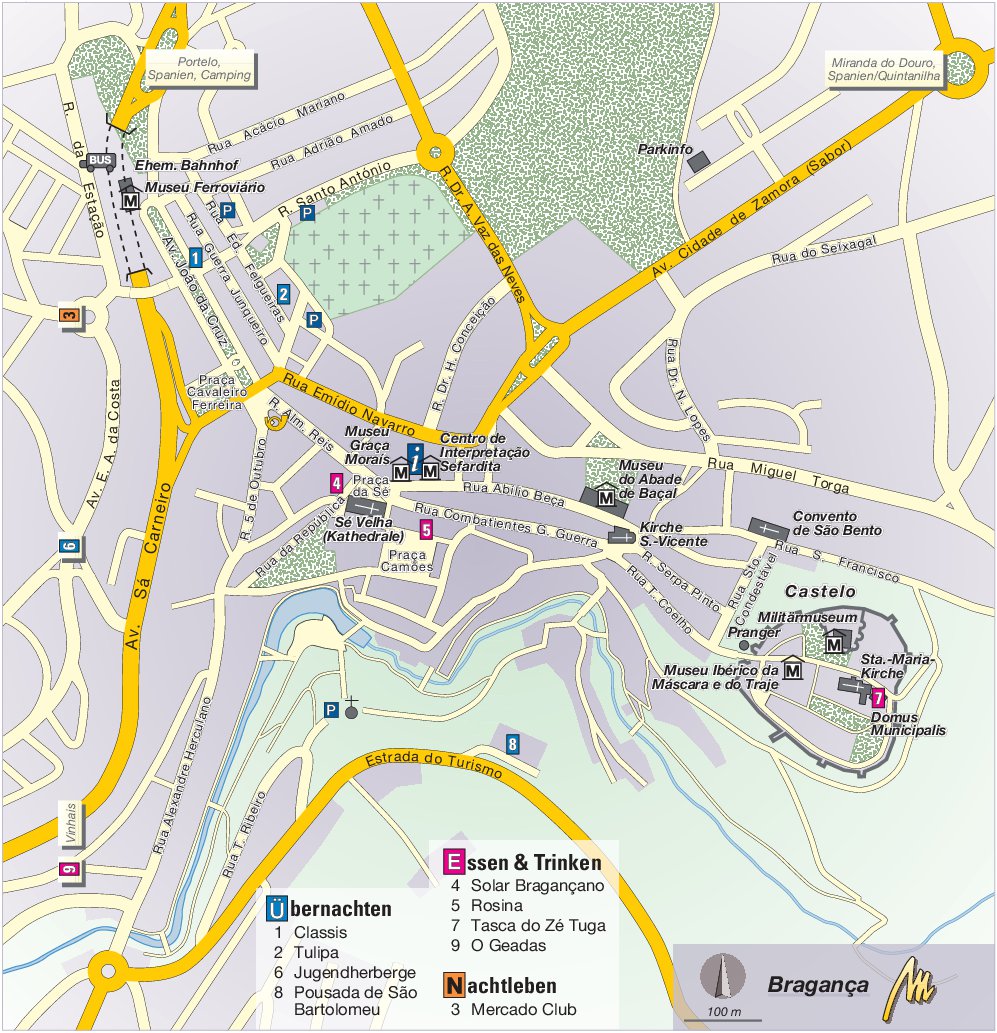
Nightlife The student cafés line the streets Alameda de Santa Apolónia and Avenida Sá Carneiro, which surround the campus of the University Hill. The hip Mercado Club 3 is located more in the city centre, below the market hall.